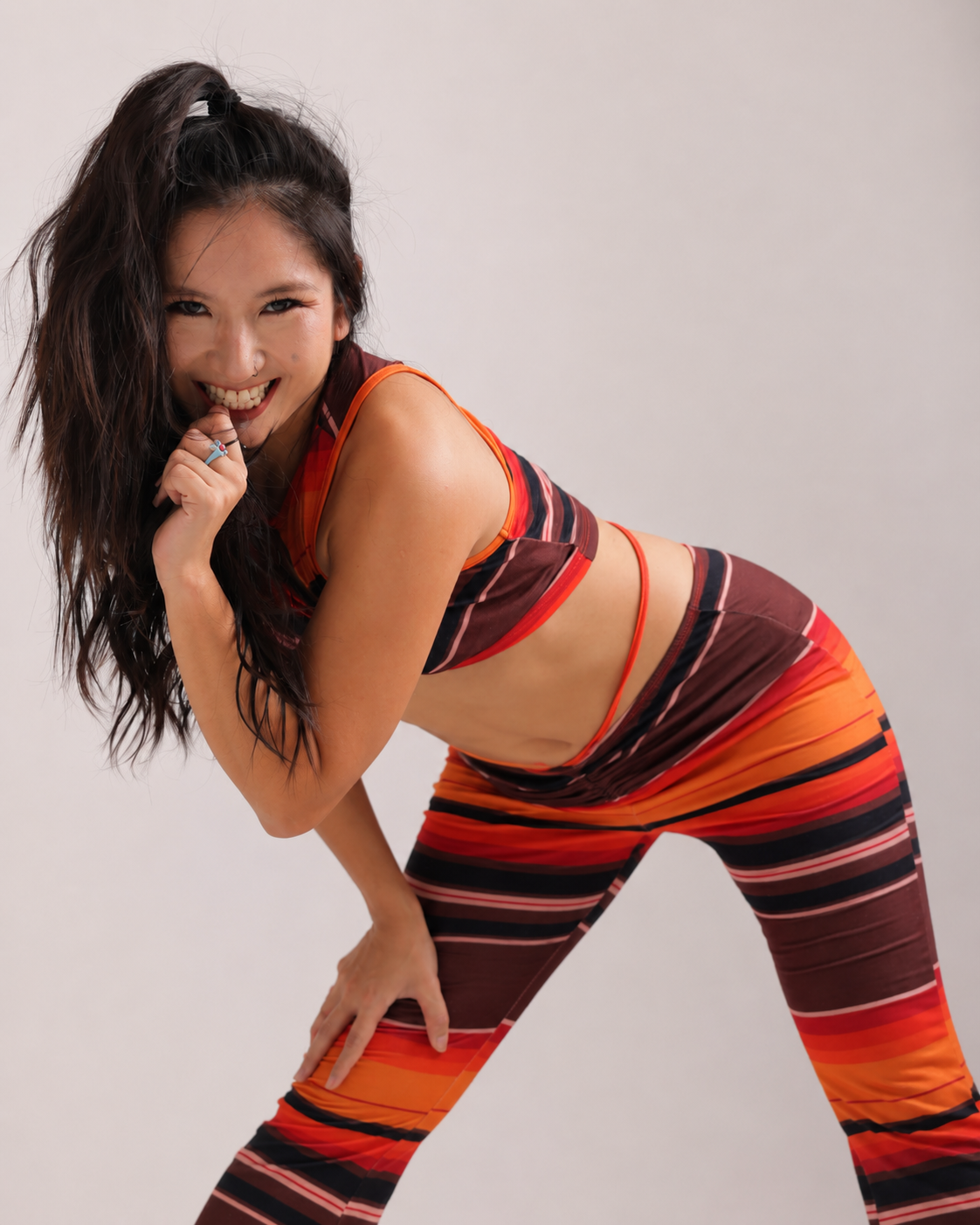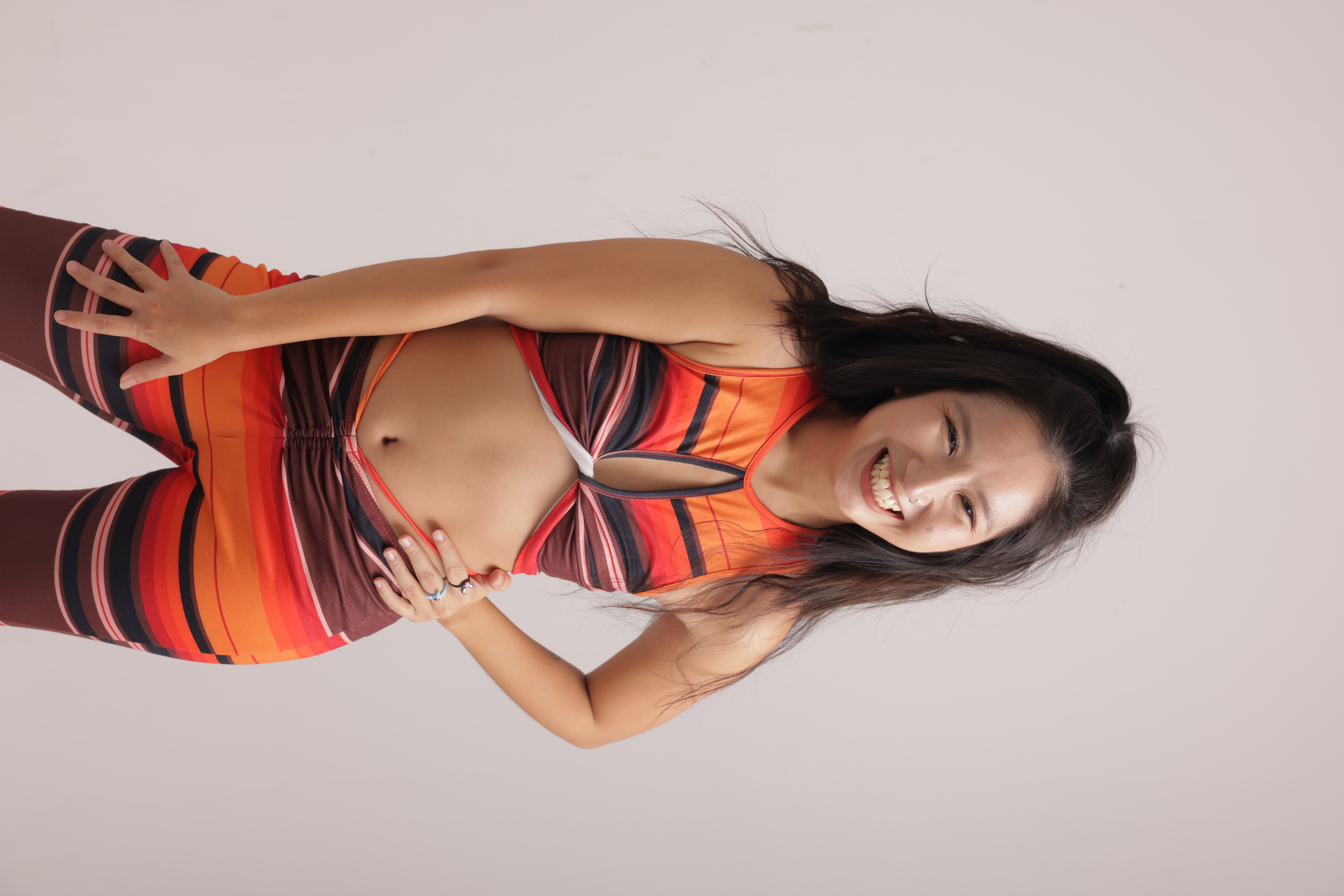
When it comes to dance, I often hear: "You gotta take it seriously to grow’’.
While I agree with some of the things people mean by that, like dedicating time to practise, setting SMART goals, and staying consistent,etc. I think we sometimes forget about the fun element along the way.
Fun is incredibly important to me when it comes to learning. I find it difficult to commit to learning something over a long period of time if I find no joy in it. I might learn it for the sake of passing an exam or completing a task. Once that purpose is fulfilled, most of the information doesn't stick around. It goes straight out of my brain.
Some personal background- I grew up in Viet Nam, where academic excellence is often prioritised above everything else. Most of my adolescence was spent in classrooms. After a full day at school, I'd go home and attend several evening classes, including weekends. Looking back, I think I developed a coping mechanism by finding ways to make learning more enjoyable.
For example, I loved drawing colourful mind maps. I would create funny rap version of boring poems that I needed to memorise. I basically gaslit myself into thinking, "This is fun!" instead of "Let's ace this exam and make my ancestors proud." xD Adding fun to the learning process helped me going and stopped me from rage-quitting.
Years later, when I started dancing, I noticed the same pattern in myself. I saw people got frustrated in dance classes and stopped coming. I also envied dancers who picked up things so fast and smoothly, who were selected to stand at the front row in group performances. Then I reminded myself “I’ve dedicated my whole childhood for getting good grades. I no longer need that. Now I’m learning things for funsie!!!’’ This strategy helped me learn dance with more joy and lightness as an adult.
The more I explore this as both a learner and a teacher, the more I realise that fun is not the opposite of ‘’serious learning’’. It actually fundamental to how I learn.
1. Fun creates intrinsic motivation
As adults, we take classes because we want to, not because we have to. Think about it: have you ever stopped doing something because you were having so much fun? Have you ever been so immersed in an activity that you completely lost track of time? It's much easier to come back to something when you genuinely enjoy it, rather than simply getting external reward (or maybe I’m wrong- sometimes others’ validations can be a strong motivation).
As humans, we naturally seek pleasure and avoid suffering. Most adults come to dance classes to have fun, express themselves, and decompress after work, not to collect more stress. I've seen many dance schools unintentionally drive new students away through intensity, pressure, high expectations, and a lack of enjoyment. When something that is supposed to be fun starts feeling like work, resistance begins to appear. You might retain some high achievers, but what about the majority of other students?
2. Fun changes the way our bodies moves
When I'm having fun, my body becomes more open, relaxed, expressive, and coordinated. When I'm stressed, my body does the opposite. I become tense, closed off, defensive, and disconnected. This is super important to such physical activities like dancing.
I've attended dance classes where fear was used as a teaching tool. A teacher would shout at students or publicly criticise them when they forgot a move or didn't apply a technique correctly. I became so stressed and stiff that my body struggled to cooperate. It’s even worse when it’s pole dance- my hands get too sweaty I can barely climb the pole.
Now that I teach, I notice the same thing in my students. Whenever someone feels overwhelmed or anxious, their shoulders rise, their breathing becomes shallow, and they struggle to stay present. The moment I make them laugh with silly jokes, their bodies immediately soften and relaxed.
3. Fun creates psychological safety
When I'm having fun, my brain shifts into a curious, relaxed, and eager-to-learn state. Instead of constant checking: "Am I doing this right?" and looking for correction, I start asking: "What happens if I try this?" When I feel confident and playful, I'm much more willing to attempt challenging tricks, trust my body to improvise, and push my limits safely.
I also notice that I remember experiences attached to joy far better than information learned under pressure. I barely remember a choreography that I learned quickly for an audition. Yet I can remember a dance workshop from 6 years ago because the teacher was so fun and inspiring! She invited the class to embody a sassy queen who obsessed with Horoscopes stuff (we were dancing to ‘’Signs’’ by Beyonce), and it didn’t matter if we didn’t remember every details of the choreo, as long as we had fun! Fun makes mistakes feel less threatening and encourage faster learning (my Asian perfectionism cried a little).
As a result, I've seen myself and many others become surprisingly skilled at hobbies, sometimes even more than at our corporate jobs. Eventually, some people enjoy their hobby so much that they turn it into a full-time career!
To this day, I don't think fun is a bonus ‘’nice to have’’ for learning. Fun is part of the learning process itself. It helps me stay curious when things get difficult. It helps me recover from mistakes instead of being paralysed by them. It helps me come back the next day, the next week, and the next year. As an adult learner, I don't dance because I have to. I dance because I choose to. And if I want to keep choosing it for years to come, fun cannot be an afterthought. It has to be part of the journey.
In the next article, I'll share more about how I intentionally integrate fun into my teaching method for adult learners. Stay tuned!